What is Ergonomics?
Office ergonomics focuses on the design of a workspace to allow workers to undertake their tasks within a comfortable environment, to perform at their best and reduce the risk of injury.
Why is Ergonomics Important for Businesses?
Ergonomics are no longer viewed as optional extras. They sit at the centre of sustainable wellbeing, performance, and employee engagement. Whether employees are based in an office, working from home or moving between both, their physical comfort plays a significant role in how effectively they can work each day.
Small, practical changes to how work is set up and managed can make a meaningful difference to morale and overall wellbeing.

Did You Know?
For people working in an office environment, 14% of workplace injuries are to a person’s back because of muscle strain from repetitive work and computer use.1
Flexibility is Key to Boosting Productivity
Key principles apply across both office and home environments, and flexibility is often required. Not every employee works at their best in an open office, and not everyone has access to a dedicated office space at home. Offering a variety of work zones in the office, leaders modelling healthy habits, good ergonomics, and support of hybrid work can significantly improve comfort.
Encouraging employees to regularly review their set up and make small adjustments will help in preventing injuries or issues from becoming ingrained.
Here is a checklist of tips to keep in mind:
1. Workstations that support the whole body
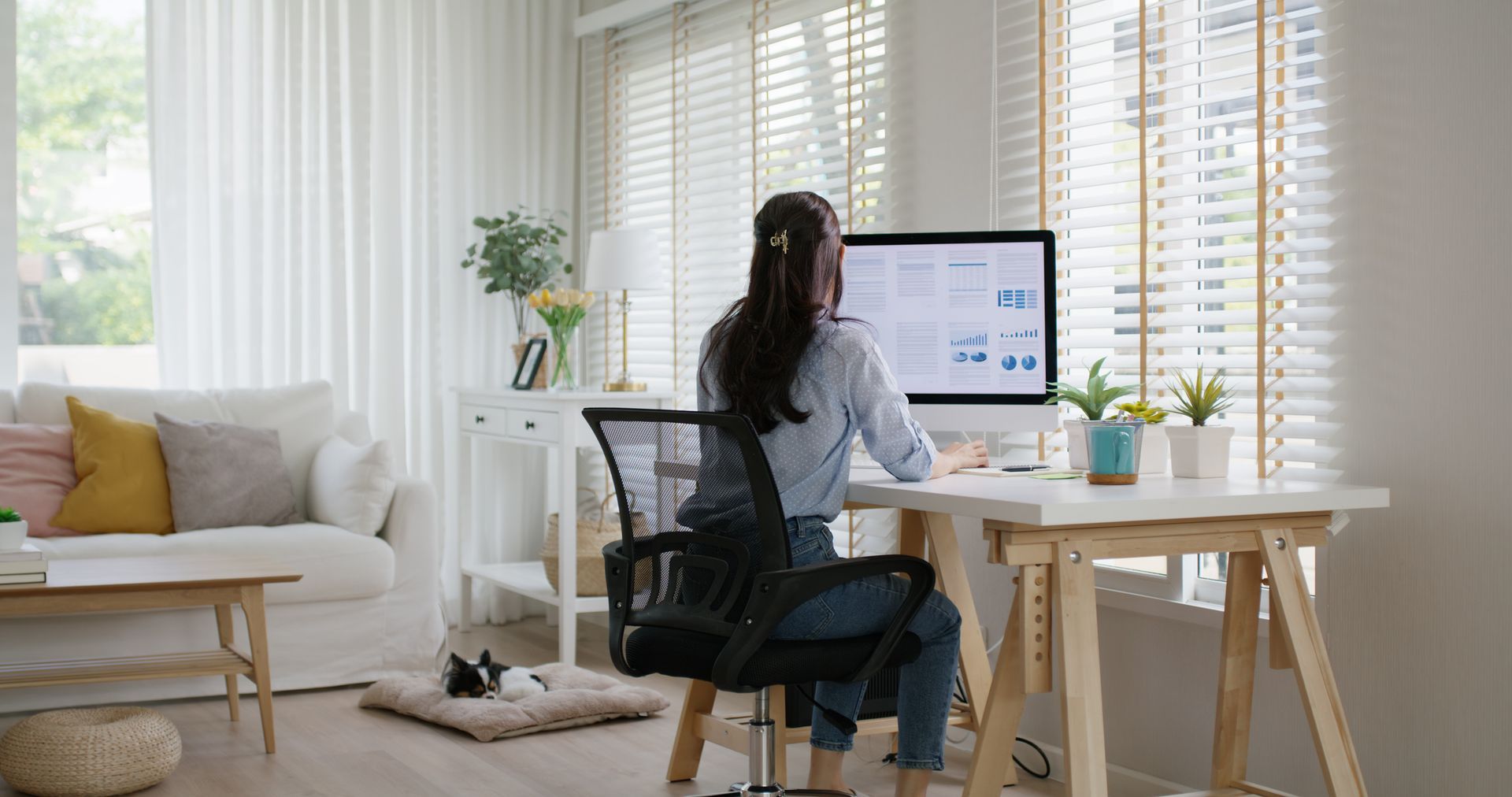
- Desks should allow shoulders to remain relaxed and forearms to rest comfortably
- Chairs should support the lower back, with feet flat on the floor or on a footrest
- Screens should be positioned at eye level and directly in front of the user
- Home-based workers benefit from a separate keyboard, mouse and raised laptop or secondary screen

2. Agile work practices
- Add short breaks to change posture or walk around throughout the day
- Stand up during calls or briefly stretch between tasks
- Choose a smaller drink container and refill it often with a healthy drink of your choice.
- Normalise
movement – neither just standing nor just sitting for hours is ideal

3. Support focus and wellbeing
- Ensure lighting, temperature and noise levels are appropriate; offer a variety of work zones
- Support home workers to manage distractions and set clear work boundaries
- Foster a
culture where comfort and wellbeing are openly discussed and supported
TIP
Employees benefit from guidance and a supportive work culture. When employees feel trusted to manage their environment, they are more likely to engage positively and proactively when it comes to their own wellbeing.
Get Expert Advice
One practical way to support both office-based and home-based employees is through ergonomic assessment. A simple self-assessment allows workstations to be adjusted to individual needs, recognising that comfort and fit may vary from person to person.
Next Steps: Take an Ergonomic Self-Assessment
As an award-winning recruitment company in safety and wellbeing, Chandler Macleod has designed an assessment that is practical and easy to complete. Employees can work through it on their own or with an observer of their choice. We are happy to share our Ergonomic Assessment form with our employees. Interested? Contact us to get started.
A healthy workplace is built through consistent, thoughtful actions. When comfort and wellbeing are prioritised, everyone benefits.
Additional Resources
Check out these resources that you might find helpful when assessing your workplace setup:



References:
- Safe Work Australia (2025). Office Work. https://www.worksafe.vic.gov.au/office
Liked this blog? Share it with your network: