












Resignation Letter - Free Template
Ready to take the next step in your career? Resign professionally with our simple, customisable resignation letter template.
Whether you're moving into a new role, changing industries or taking time for yourself, it’s important to leave on a positive note. Our free resignation letter template helps you communicate clearly, professionally and with confidence.
- Easy to customise
- Suitable for any role or industry
- Helps you maintain strong professional relationships
Why your resignation letter matters
A resignation letter is more than a formality — it’s your opportunity to leave a lasting positive impression.
A well-written resignation letter:
- Confirms your final working date clearly
- Maintains professionalism and goodwill with your employer
- Supports a smooth transition for your team
- Helps protect your professional reputation and future references
If you're unsure how to approach the process, our FAQs outline what to say and how to leave on the right terms.
Taking the time to resign professionally can make a real difference to how you’re remembered and the opportunities that come next.
What's included in the resignation letter template?
Our resignation letter template gives you a clear, structured format you can adapt in minutes. It includes:
- A professional opening and clear statement of resignation
- Guidance on confirming your final working date
- A section to express appreciation for your experience
- A polished closing to leave on a positive note
Simply download, update your details, and tailor the tone to suit your situation.
When should you use a resignation letter?
You should provide a formal resignation letter whenever you are leaving a role, including:
- Moving to a new job opportunity
- Returning to study or taking a career break
- Changing industries or career direction
- Relocating or personal reasons
Even if you’ve already had a conversation with your manager, a written resignation provides clarity and forms part of your official employment record.
Tips for resigning professionally
To ensure a smooth transition, keep these best practices in mind:
- Speak to your manager before submitting your resignation letter
- Be clear and concise — keep your letter professional and to the point
- Avoid negative language or criticism
- Offer to support the transition where possible
- Continue to perform professionally during your notice period
Maintaining professionalism throughout your exit helps protect your reputation and relationships.
Want more guidance on leaving your role professionally? Read our FAQs to ensure you handle every step with confidence.
Planning your next move?
If you’re resigning, chances are you’re preparing for your next opportunity. We’ve got you covered with helpful resources:
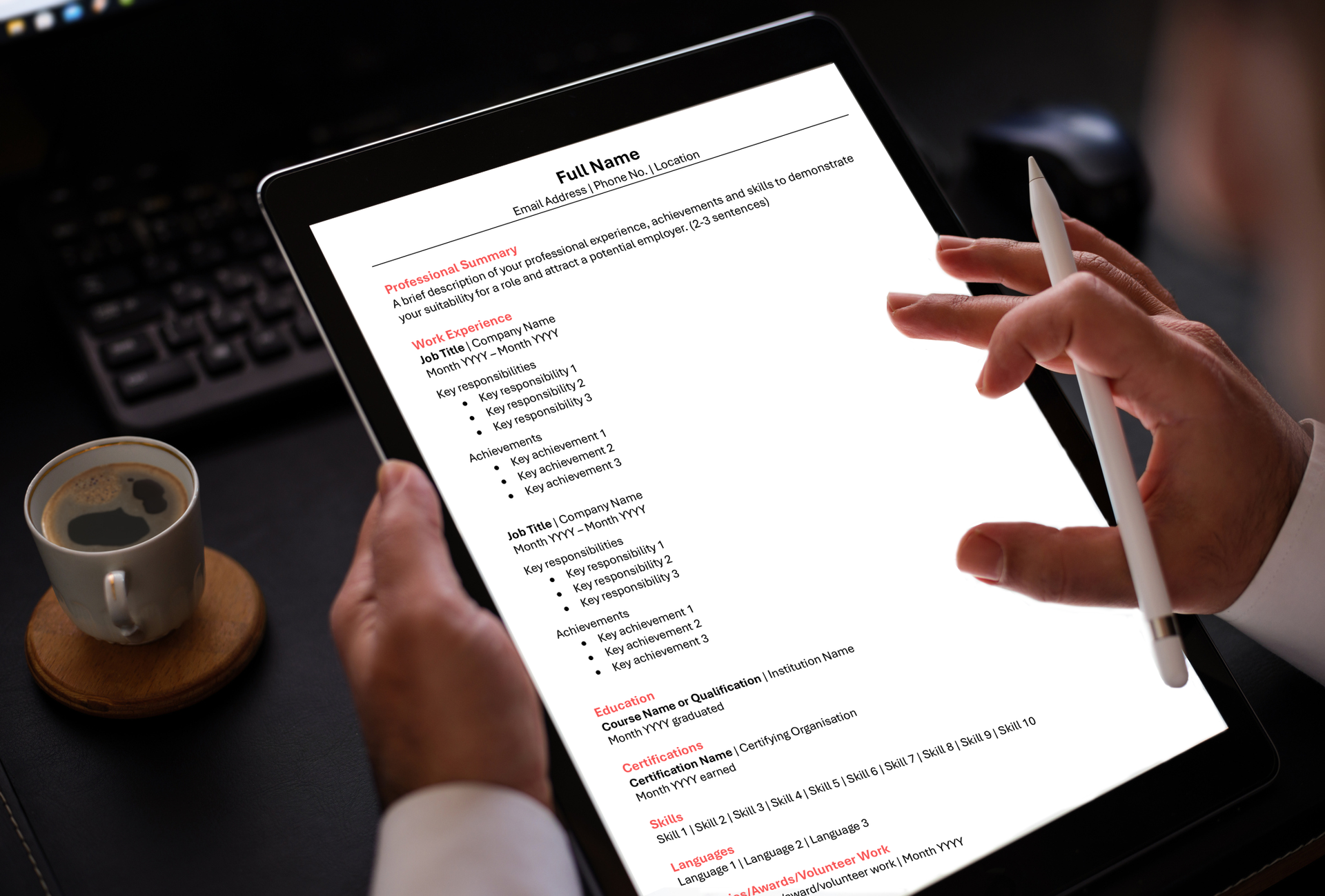



Download your Resignation Letter Template
Take the next step in your career with confidence. Our free template makes it easy to resign professionally and move forward with clarity.
FAQs About Resigning from Your Job
When should I submit my resignation?
It's best to resign only after you've received and accepted your new job offer in writing. Before submitting your resignation, check your employment contract so you understand your required notice period and can plan your transition accordingly.
Who should I tell first when I decide to resign?
Your direct manager or supervisor should always be the first person you inform. Avoid discussing your plans with colleagues before you've had a conversation with your manager, as this helps maintain professionalism and respect.
Should I resign in person or by email?
Where possible, arrange a face-to-face meeting with your manager to discuss your resignation. You can then provide your resignation letter during the meeting and follow up with an email if required by your organisation.
What should I include in my resignation letter?
A resignation letter should be brief, professional and respectful. Include your intention to resign, your final working day and a note of appreciation for the opportunity. There's no need to explain your reasons for leaving in detail. Download your free resignation letter template.
How should I respond to a counter-offer?
If your employer presents a counter-offer, take time to carefully consider it. Reflect on the reasons you decided to leave and whether those factors would genuinely change if you stayed. Consider more than just salary when making your decision.
What should I do during my notice period?
Continue performing your role to the best of your ability and help ensure a smooth handover. Completing outstanding work, documenting key processes and supporting colleagues can help you leave on a positive note.
Do I have to participate in an exit interview?
Participation requirements vary by employer, but exit interviews can be a valuable opportunity to share constructive feedback. If you choose to provide feedback, keep it professional, respectful and focused on helping the organisation improve.
Why is it important to leave on good terms?
Maintaining positive relationships with managers and colleagues can benefit your future career. You may need professional references, recommendations or networking connections later on, so it's always worth leaving as professionally as possible.

More resume tips and resources

Here are 8 things not to do on your resume which will help make a great first impression.

How to Explain Gaps in Your Work Experience – solutions for resumes and interviews by Chandler Macleod. Visit our blog for great new content by Chandler Macl...

Simple Ways to Make Your Resume Stand Out by Chandler Macleod. Visit our blog for great new content by Chandler Macleod.

How to Tailor Your Resume for Recruiters by Chandler Macleod. Visit our blog for great new content by Chandler Macleod.